
Rebuilding How Design Works: Leading an AI-Native Practice
I rebuilt the design operating model to increase leverage, using AI to accelerate prototyping, automate research workflows, and raise the quality bar while shipping faster.
Stori’s design team supported a multi-product financial platform serving millions of customers across LATAM, and the roadmap was growing faster than the team could. Rather than hire I chose to rebuild the practice itself so each IC operated with more leverage, without letting craft slide. The risk was real, AI makes it cheap to ship mediocre work quickly. The team had to raise both quality and speed, or it would fail at both.
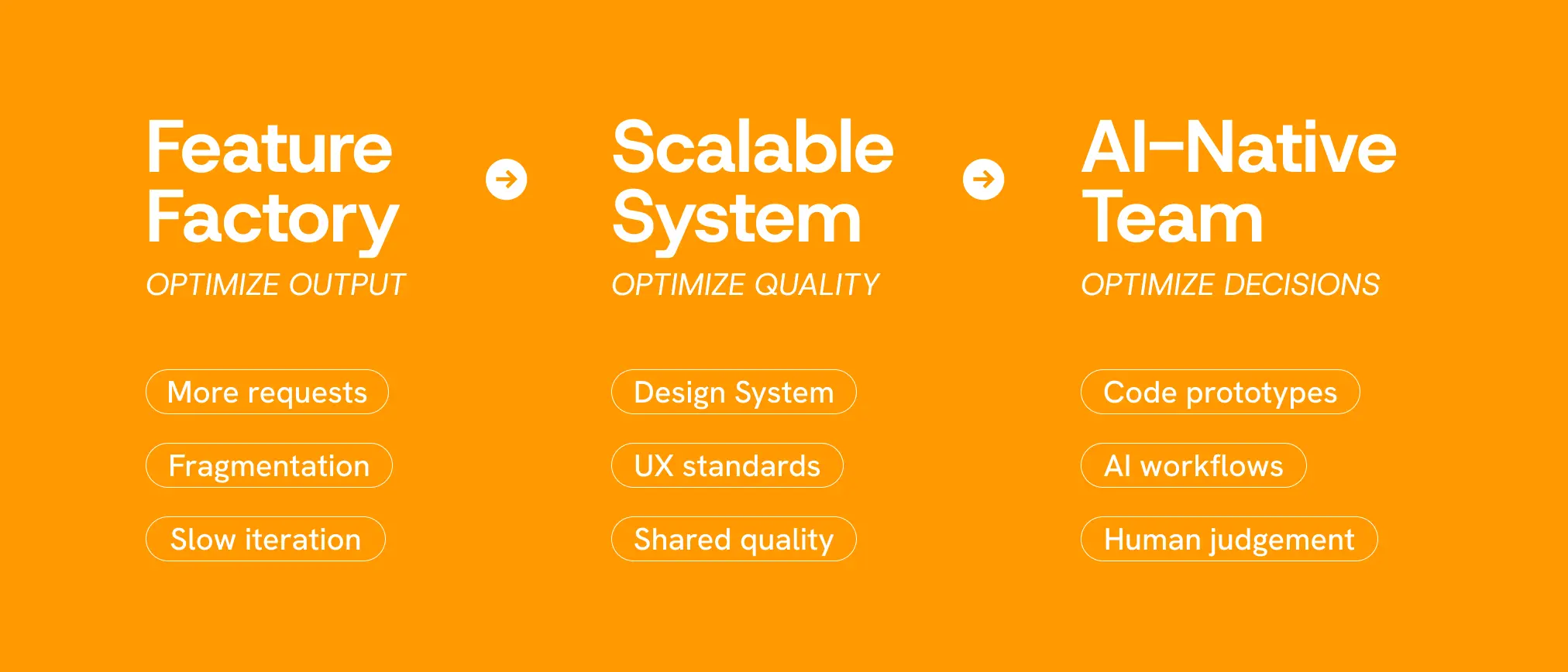
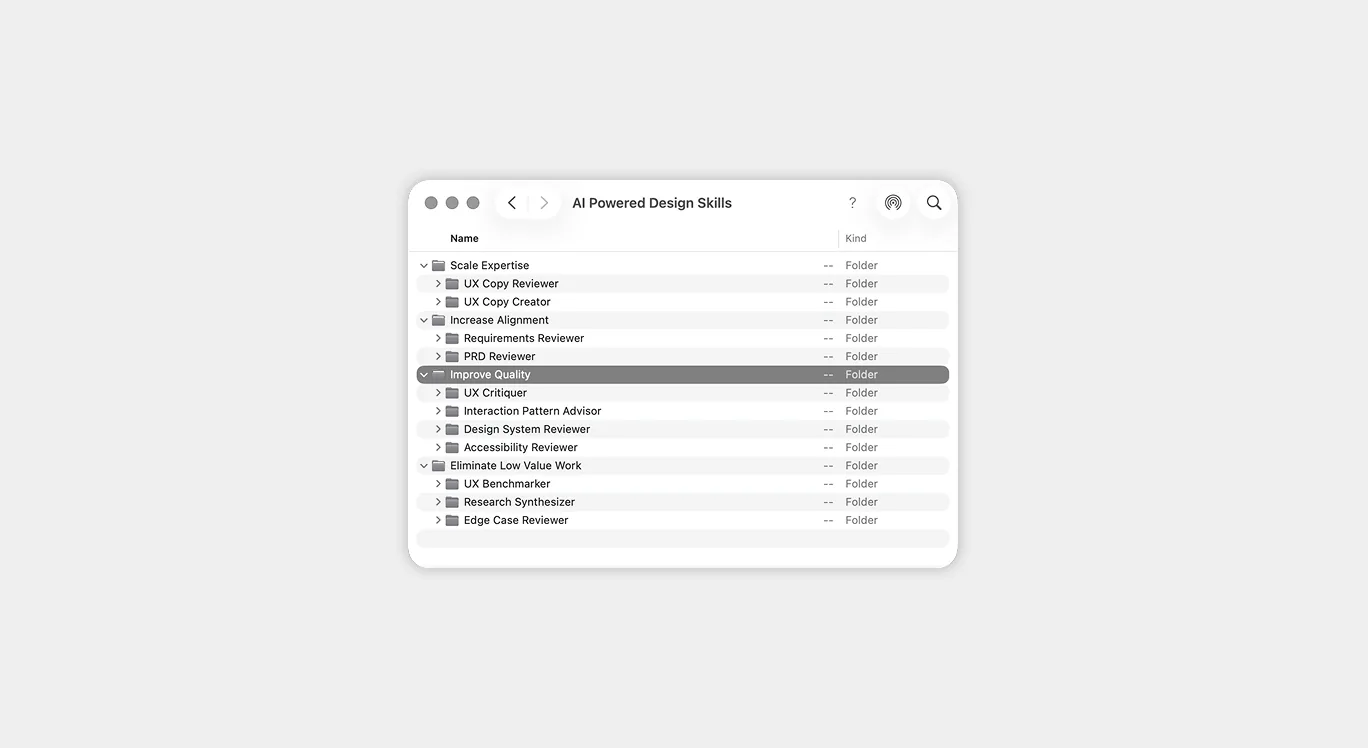
I led the transformation personally, ahead of any mandate, by showing not telling. I retooled my own workflow first, brought working examples back to the team, and shared early wins and learnings. Adoption was uneven, so I set the expectation of exploration and learning over output at first — with clear goals: eliminate low-value work, increase iteration speed, and raise ownership of shipped UX quality. The practice stuck the same way any craft standard sticks: training, shared playbooks, and the same quality gates every shipped flow goes through.
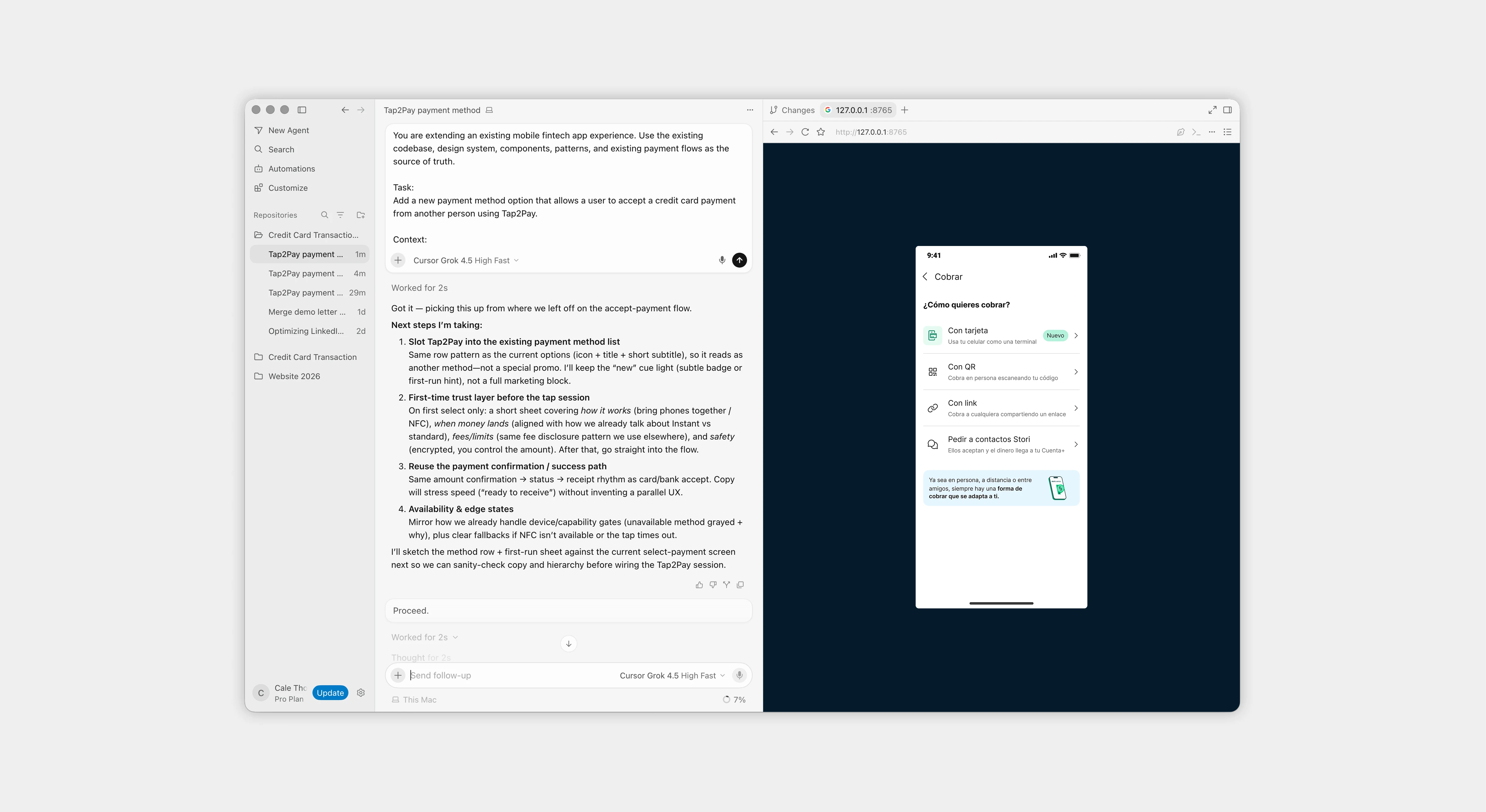
Trained the entire design team on Cursor to produce front-end code, moving them closer to controlling final quality and increasing our iteration speed. Designers now validate flows as working prototypes before engineering handoff.
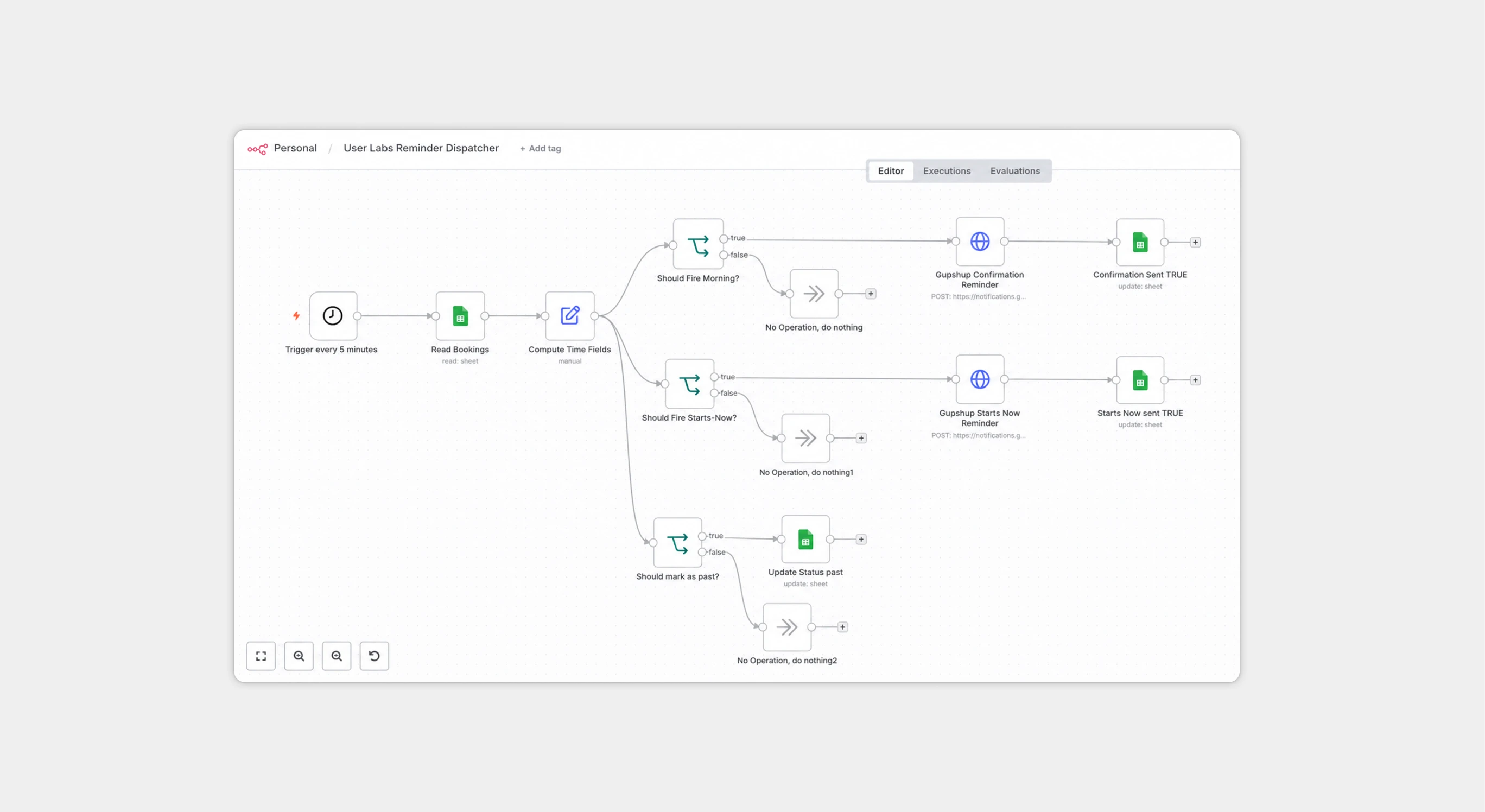
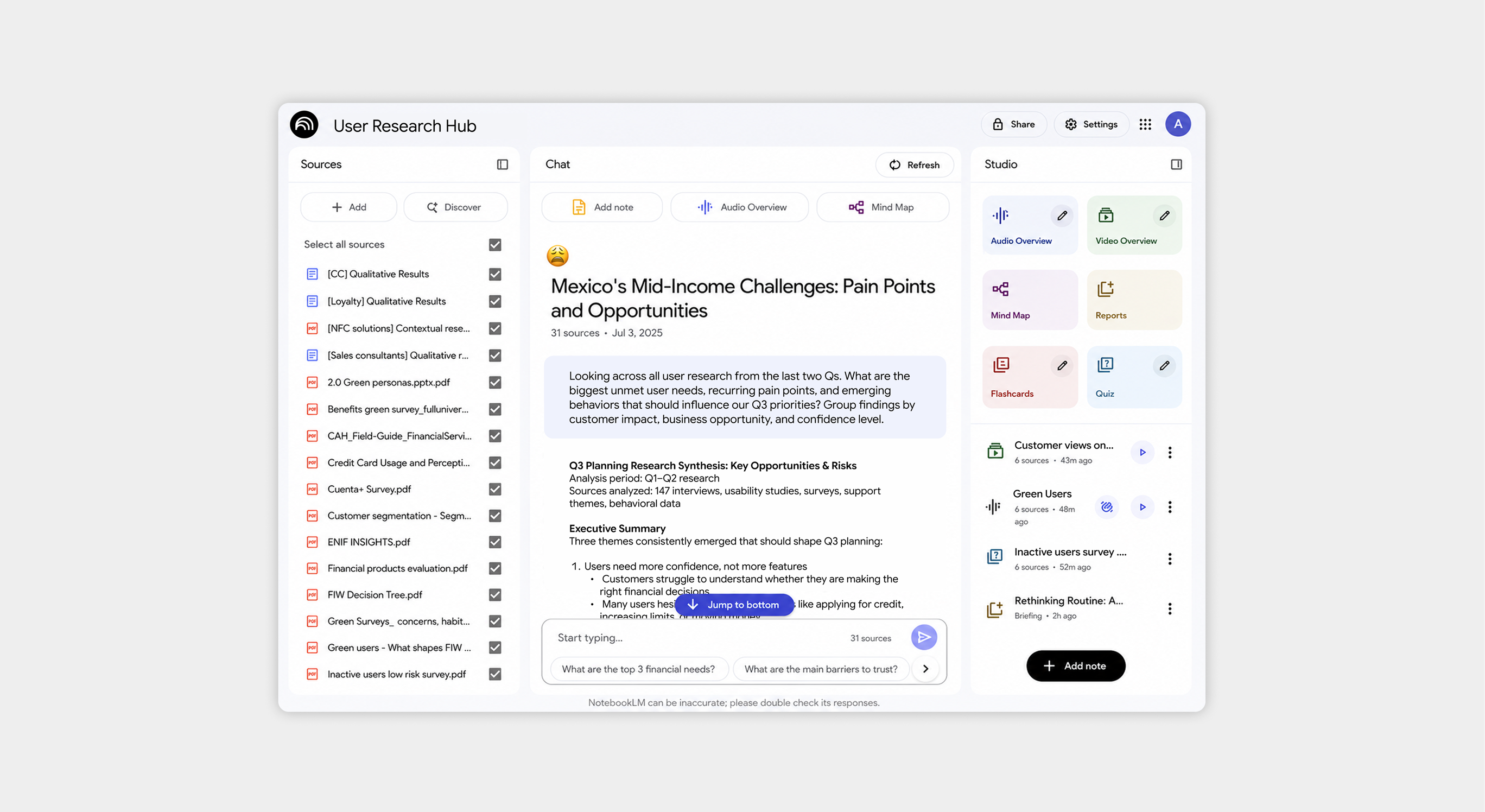
Automated participant recruiting and research synthesis, and centralized customer insights in an AI notebook the whole company queries. Weekly research became sustainable for a lean team.
Wrapped the new velocity in Core Flow Reviews, DoD, and UX audits, so speed had a quality gate, not a quality cost.
Led qual/quant research into customer AI readiness and built the framework for proactive vs. reactive AI entry points grounded in trust signals.
AI will not replace product judgment. It will expose the lack of it, as cheap production increases the pace of outputs. When anyone can generate solutions, the advantage belongs to leaders who can define the problem, set the quality bar, and choose what deserves to exist. AI expands possibilities. Leadership creates focus.
I’ve built this way since before the current wave. As far back as Foureyes (2016–19) I designed AI-driven sales recommendations around transparency, explainability, and user control, principles that are just as relevant now in how I lead teams building agentic products.